

For patients with thyroid nodules, treatment choices have been limited: continue monitoring it while living with symptoms or undergo surgery to remove part of the thyroid.
Now, patients at MUSC Health have another option.
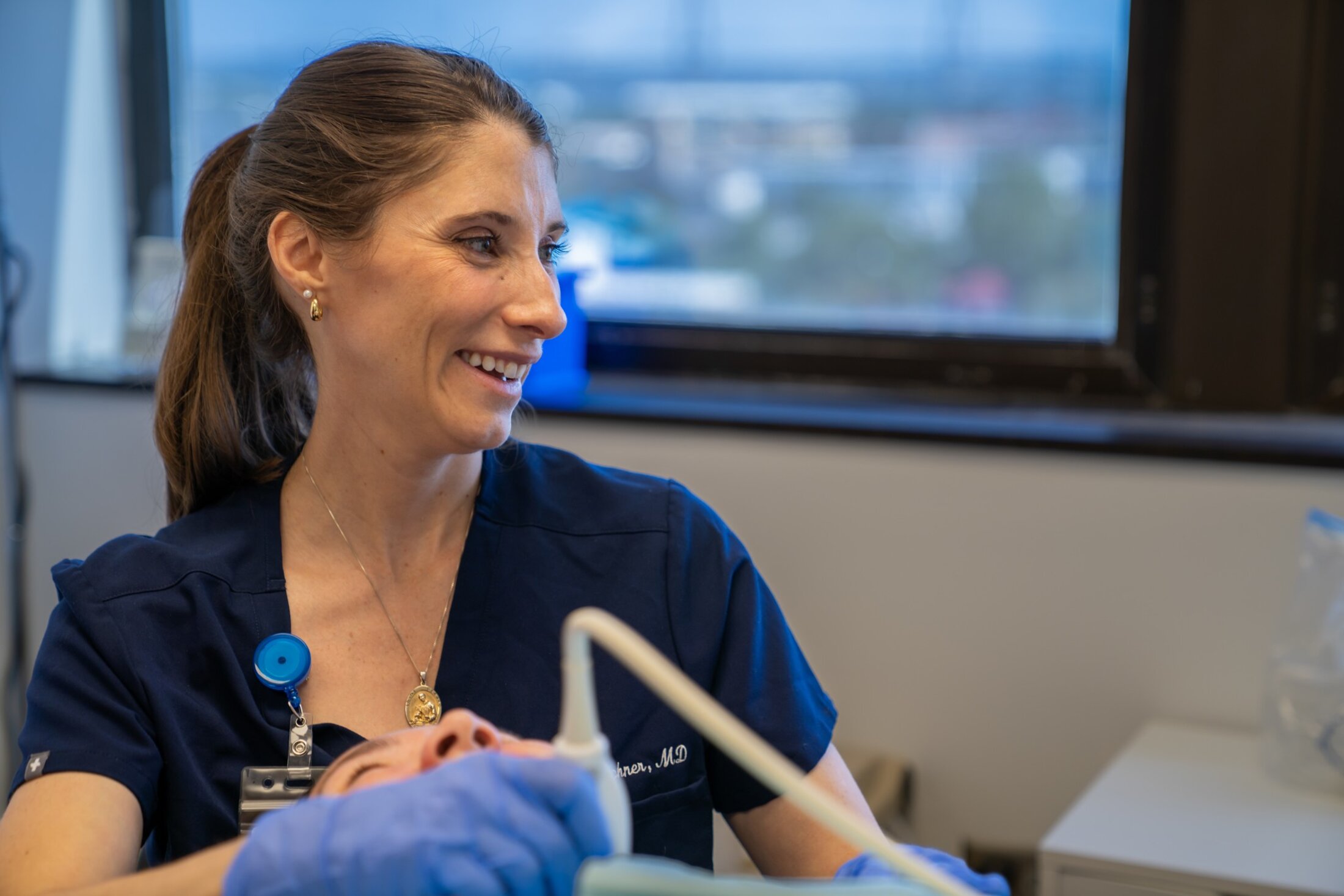
Radiofrequency ablation, or RFA, uses heat to shrink thyroid nodules without surgery, offering a minimally invasive alternative for certain patients with nodules that can cause pressure, discomfort or other symptoms. The treatment is being offered by endocrinologist Chelsey Teschner, M.D., who is part of the multidisciplinary thyroid nodule and cancer team at the Wendy and Keith Wellin Head and Neck Clinic, part of MUSC Hollings Cancer Center.
“It can be that happy middle ground for the right patient,” Teschner said of RFA. “What we’re doing is making it so that patients have a choice. If they don’t want to undergo surgery, but they also don’t want to only observe, we can do something for them now.”
Filling a gap in thyroid nodule treatment
Thyroid nodules are common. Teschner said up to half of people will have one by age 50. Most never cause a problem, but some continue to grow or become large enough to cause pressure in the neck, difficulty swallowing or breathing or other symptoms. Nodules can also become noticeable enough to create cosmetic concerns. Even when a nodule is benign, those symptoms can interfere with a person’s quality of life.
Until recently, however, patients who wanted to do something about them had few options short of surgery. RFA is designed to fill that gap.
We’re expanding the options that patients have and giving them more control over determining what is the best fit for their thyroid care.
During the procedure, a needlelike probe is inserted through the skin and into the thyroid nodule using ultrasound guidance. Radiofrequency energy generates heat that damages the targeted tissue. Over time, the treated tissue shrinks, reducing the size of the nodule and the symptoms it causes.
The goal is not necessarily to make the nodule disappear completely, Teschner explained, but to shrink it enough that it no longer causes problems.
For some patients, RFA also offers an important advantage: preserving thyroid function.
Surgery for these nodules generally involves removing half of the thyroid. Teschner said roughly 30% to 40% of patients develop hypothyroidism afterward, meaning their thyroid no longer produces enough hormone, and they need to take lifelong hormone medication. In contrast, with RFA, the risk of hypothyroidism is less than 1%.
A procedure performed in minutes
RFA is performed in an outpatient clinic, with patients awake throughout the procedure. They receive medication to help them to relax as well as local anesthetic to numb the treatment area, allowing them to avoid general anesthesia and a hospital stay.
The procedure usually takes 20 to 45 minutes, depending on the size of the nodule. Patients are then observed for about 20 minutes before heading home. Most people can eat and drink normally afterward, although they are asked to avoid strenuous activity and heavy lifting for a few days.
“Half the time I feel like I’m chasing patients down the hallway after the procedure because they’re ready to go right away,” Teschner said with a laugh.
As with any medical procedure, RFA does carry risks, including some of the same rare complications associated with thyroid surgery. Teschner talks through those risks and the expected benefits with each patient to determine whether RFA is an appropriate choice.
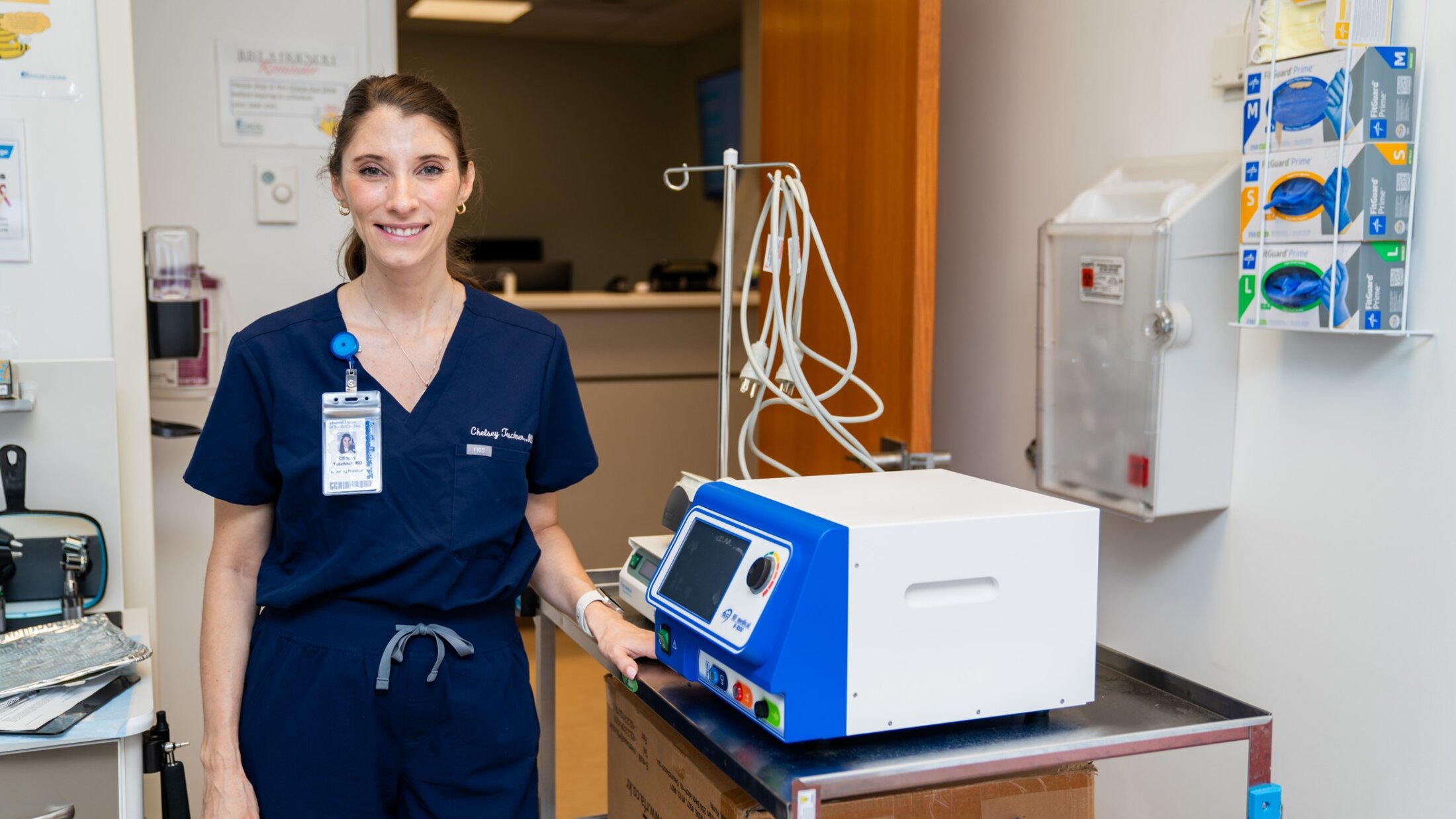
Care also does not end when a patient leaves the clinic. Patients continue to be monitored because small areas can begin growing again years later. Follow-up visits are initially more frequent before eventually spacing out to about once a year. If an area does begin to grow again, the care team may continue to watch it or consider another ablation.
Figuring out who is a good candidate for RFA requires careful consideration. RFA is primarily used for benign nodules that are causing symptoms because of their size or for certain nodules that produce excess thyroid hormone.
But doctors are also exploring its use in thyroid cancer. Growing research suggests RFA may be an option for carefully selected patients with very small, localized thyroid cancers, typically less than 1 centimeter. Teschner emphasized that RFA is not a replacement for standard thyroid cancer treatment in most patients. Surgery remains the appropriate treatment for many cancers, and using ablation requires careful patient selection and an individualized discussion.
Bringing specialized expertise to MUSC
Although RFA is becoming more common in the U.S, it remains a specialized treatment that is not available at every major medical center.
Teschner joined MUSC this fall and brought with her the procedure for treating thyroid nodules. Her experience with RFA dates to 2020 and includes her time on the faculty at George Washington University and a fellowship at New York University, where she trained with one of the physicians involved in the technique’s early adoption. She said that experience is particularly important for a procedure that is still relatively new.
Teschner also serves as chair of the Guidelines and Statements Committee for the North American Society for Interventional Thyroidology, helping to shape clinical guidance for treating thyroid nodules and thyroid cancers. Bringing her expertise to MUSC is part of a growing range of approaches to thyroid care, of which RFA is only one piece.
“At MUSC, we now offer the full gamut,” Teschner said. “We have excellent surgeons. We’re offering RFA. We’re working with interventional radiologists who perform thyroid artery embolization. It’s about offering all the state-of-the-art options for thyroid care.”
That breadth of expertise means the goal is not to steer every patient toward the newest treatment, Teschner said. Instead, it is to make sure that patients understand the full range of approaches available and can decide with their care team which best fits their needs.
“We’re expanding the options that patients have and giving them more control over determining what is the best fit for their thyroid care,” Teschner said. “We’re putting that entire picture together and making sure patients understand the choices they have.”
Featured in this story
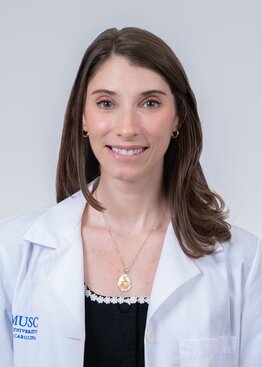
Chelsey Baldwin Teschner, M.D.
Dr. Chelsey Teschner is a board-certified endocrinologist with clinical and research interests in thyroid disease. She earned her medical degree from the Medical University of South Carolina, completed her residency in Internal Medicine at the University of Virginia, and pursued fellowship training in Endocrinology, Diabetes, and Metabolism at New York University. She also holds Endocrine Certification in Neck Ultrasonography (ECNU).
Dr. Teschner specializes in thyroid ultrasonography and fine needle aspiration, and is nationally recognized for her expertise in radiofrequency ablation, a minimally invasive technique used to treat symptomatic and hormonally active thyroid nodules, as well as select thyroid cancers.
In addition to her clinical practice, Dr. Teschner is an Associate Professor of Medicine and is actively involved in teaching minimally invasive thyroid techniques to physicians nationwide. Her academic work focuses on advancing minimally invasive approaches to thyroid disease management. She serves as Chair of the Guidelines and Statements Committee for the North American Society for Interventional Thyroidology.
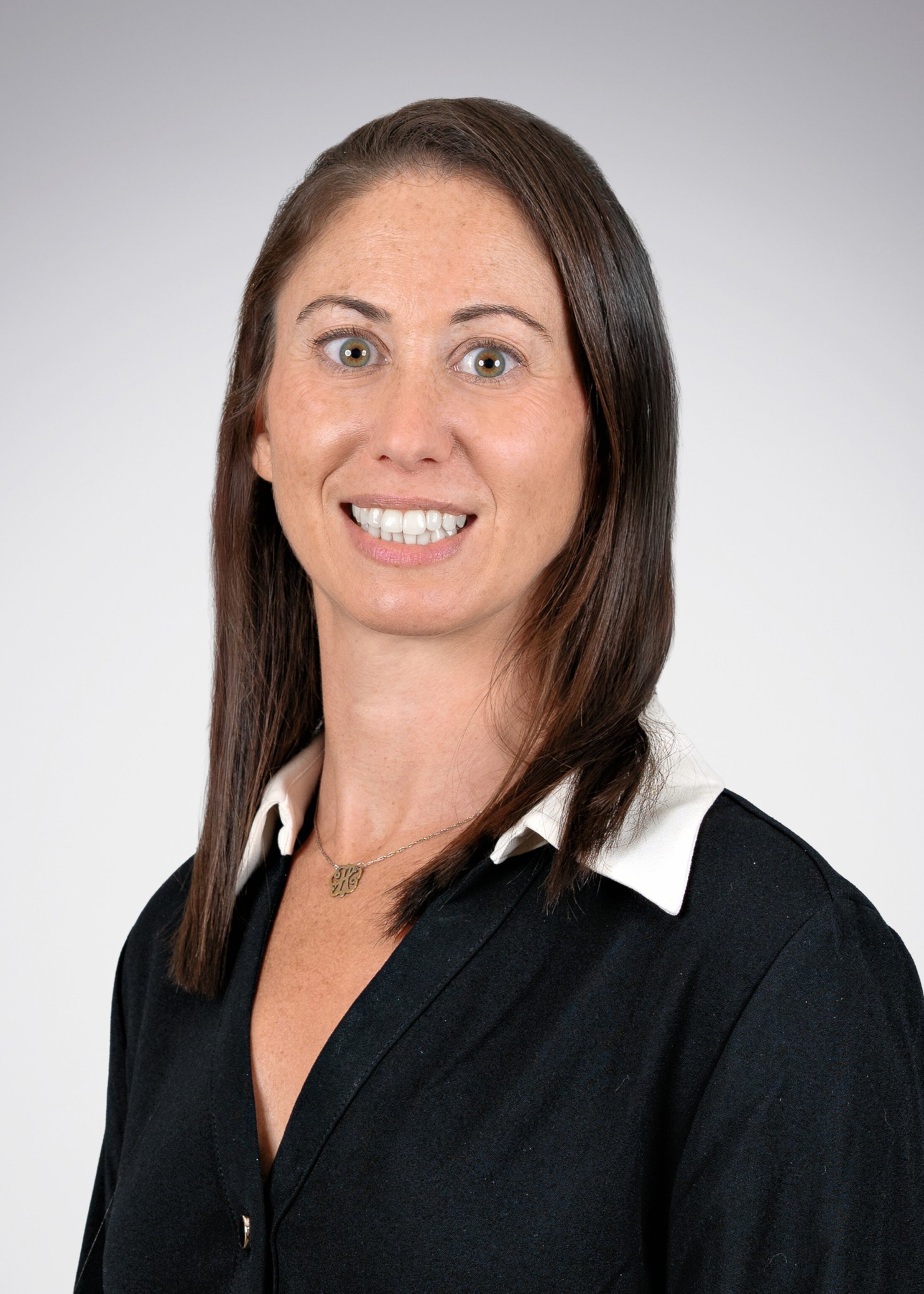
Hayley Kamin
Communications Manager
Hayley Kamin is the communications manager for the Hollings Cancer Center Communications and Marketing team, having joined the team in 2025 after three years as a communications specialist at the National Institutes of Health (NIH). As a science communicator with a Ph.D. from the University of Florida, she has extensive experience translating complex research into clear, engaging content. Her career has included roles at the NIH’s National Institute of Mental Health and the American Psychological Association, where she led content development and editorial strategy, developed science and health communications and worked with researchers and clinicians to strengthen public understanding of research.
Contact Hayley at kamin@musc.edu.