

For many patients with sarcoma, successful tumor removal is only the beginning.
Surgery may require removing large segments of bone or soft tissue, sometimes involving critical structures that affect how a patient moves, bears weight, or regains independence. What follows is not just healing, but rebuilding.
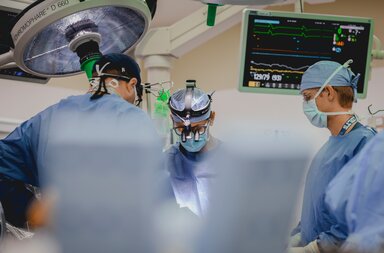
At MUSC Health’s NCI-designated Hollings Cancer Center, reconstruction is planned alongside tumor resection from the outset, with the goal of restoring both form and function wherever possible.
Using Bone Transport to Regenerate Bone
One of the most significant advances in this area is bone transport, a technique that allows surgeons to regenerate bone rather than replace it.
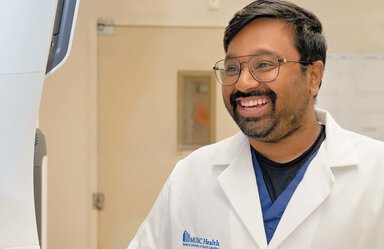
“We basically can use what’s called distraction osteogenesis and help regrow large segmental defects of bone,” says Dr. Lee Leddy, chair of Orthopaedics and Physical Medicine and Rehabilitation at MUSC.
In some cases, that can mean regenerating more than 15 centimeters of bone. Using magnetically controlled systems, surgeons gradually lengthen bone over time, allowing new bone to form and restore the defect created during tumor removal.
For patients, that approach offers an alternative to traditional reconstruction. Rather than relying on permanent implants or grafts, the focus is on regenerating bone that can integrate and function over the long term.
Planning for life after surgery
Reconstruction is not only about restoring anatomy. It is about understanding what life will look like after treatment.
“The first and foremost is, am I going to live?” Leddy says. “And then second, what is my life going to be like?”
Those conversations are part of the planning process. Some patients may return to near-normal function. Others may face long-term limitations that require adjustments in mobility, daily activity, or independence.
In some cases, reconstruction is not possible, and decisions around amputation must be made with a clear understanding of what recovery and long-term function will involve.
Expanding what recovery can look like
The impact of reconstruction extends beyond the operating room.
Patients often undergo rehabilitation, ongoing surveillance, and additional procedures as needed. Recovery can be complex, but advances in reconstruction are helping expand what is possible for patients following major tumor resection.
Leddy points to patients who, even after extensive surgery, regain a high level of function. Some are able to return to daily activities with minimal limitations. Others adapt to significant changes with resilience and support.
These outcomes reflect both technical progress and a broader focus on functional recovery as part of sarcoma care.
Reconstruction is considered from the beginning, shaping not only how surgery is performed, but how patients recover and move forward after treatment.