

For decades, a prostate cancer diagnosis has meant an impossible choice: accept radical treatment with devastating side effects, or live with the anxiety of doing nothing. Today, patients are seeking out centers that offer a third option. The Department of Urology at MUSC's comprehensive focal therapy program targets cancer while preserving quality of life, addressing a critical gap between surveillance and radical treatment.
Standard prostate cancer treatment has long presented a binary: radical prostatectomy or whole-gland radiation. Both achieve excellent cancer control. Both also carry significant risks that survivors face for decades like urinary incontinence, erectile dysfunction, or bowel complications. Recent landmark data showing no survival difference at 15 years between active surveillance, surgery, and radiation for localized prostate cancer has only intensified this debate.
To put it another way: thousands of men have undergone life-altering treatment for cancers that wouldn't have killed them. Patients face surveillance with persistent cancer anxiety, or treatment with guaranteed functional consequences. Neither option is satisfying.
MUSC Urology is responding to this challenge and looking for new, better options for patient treatment. One of those options, focal therapy, targets only the cancerous lesion while leaving surrounding tissue intact, bridging the gap between doing nothing and treating everything.
Of course, different tumors demand different approaches. So, the department has built comprehensive capabilities across several modalities:
- Irreversible electroporation: Using electrical pulses to destroy cancer cells while sparing adjacent nerves and blood vessels. Ideal for lesions near the neurovascular bundle where erectile function preservation is critical.
- Cryotherapy: Freezing targeted tissue. Particularly effective for salvage therapy when cancer recurs after radiation.
- Aquablation: Using high-velocity waterjet ablation with robotic precision. MUSC is one of only two U.S. academic centers participating in this international trial exploring aquablation's role in treating prostate cancer.
A Patient's Calculation
Imagine a patient, in his early 60s, facing a cancer aggressive enough to warrant treatment (e.g. Gleason 7, rising PSA), but localized enough that focal therapy was viable. A radical prostatectomy would be a standard approach to care with proven outcomes. But, with the NanoKnife treatment, his tumor could be eliminated without the risks associated with surgery normally. His likelihood of maintaining complete urinary and sexual function are substantially higher.
These treatments don’t apply for every patient. Ideal candidates have MRI-visible lesions confirmed by targeted biopsy, localized disease (typically Gleason 6-7), good health, and strong desire to preserve function. For qualified candidates, however, data shows that outcomes are compelling: 80-90% maintain baseline urinary function (versus 50-70% after radical prostatectomy), and potency preservation exceeds 70% (versus 30-50% for surgery). These outcomes are life-changing.
The South Carolina Challenge
Rural South Carolina has particularly poor screening rates, often driven by limited urologist availability. When screening doesn't happen, cancers grow silently until symptoms appear. As a result, some patients that arrive at MUSC Health for treatment present with advanced, metastatic disease, discovered too late for focal therapy. Others, from well-screened populations, arrive with small MRI-detected lesions perfect for targeted treatment. This disparity isn't random - it reflects systemic failures in primary care access and health literacy.
MUSC Health's community outreach program is designed to address this gap directly, advocating for routine PSA screening with the same standardization applied to mammography. The message is straightforward: early detection creates treatment options. Late detection forces radical approaches or, worse, palliative care.
The department has also built partnerships with community urologists across the region, training them to identify suitable candidates early. Rather than hoarding complex cases, MUSC Urology ensures patients access focal therapy when it provides maximum benefit.
Precision Oncology
Focal therapy represents more than technical innovation. It's a game-changer. For decades, oncologists believed in treating cancers as aggressively as possible to minimize recurrence risk. But now the Department of Urology at MUSC and others have more tools at their disposal. High-resolution MRI to visualize individual tumor foci. Targeted biopsies to characterize specific lesions. Genomic testing to predict which cancers pose real threats versus which will remain indolent. These advances enable precision oncology: treating what needs treating while preserving what deserves preserving.
MUSC Health's fellowship program embraces these new tools, and includes dedicated focal therapy training, ensuring graduates are well-trained in everything from patient selection to technical execution to outcomes monitoring. As these surgeons disperse across the Southeast, and the country, they carry expertise that benefits entire communities.
For men facing prostate cancer diagnosis, MUSC Urology's comprehensive focal therapy program offers genuine choice - not the false choice between radical treatment and anxious surveillance, but meaningful options that balance cancer control with quality of life. That's what modern medicine should provide, and increasingly can.
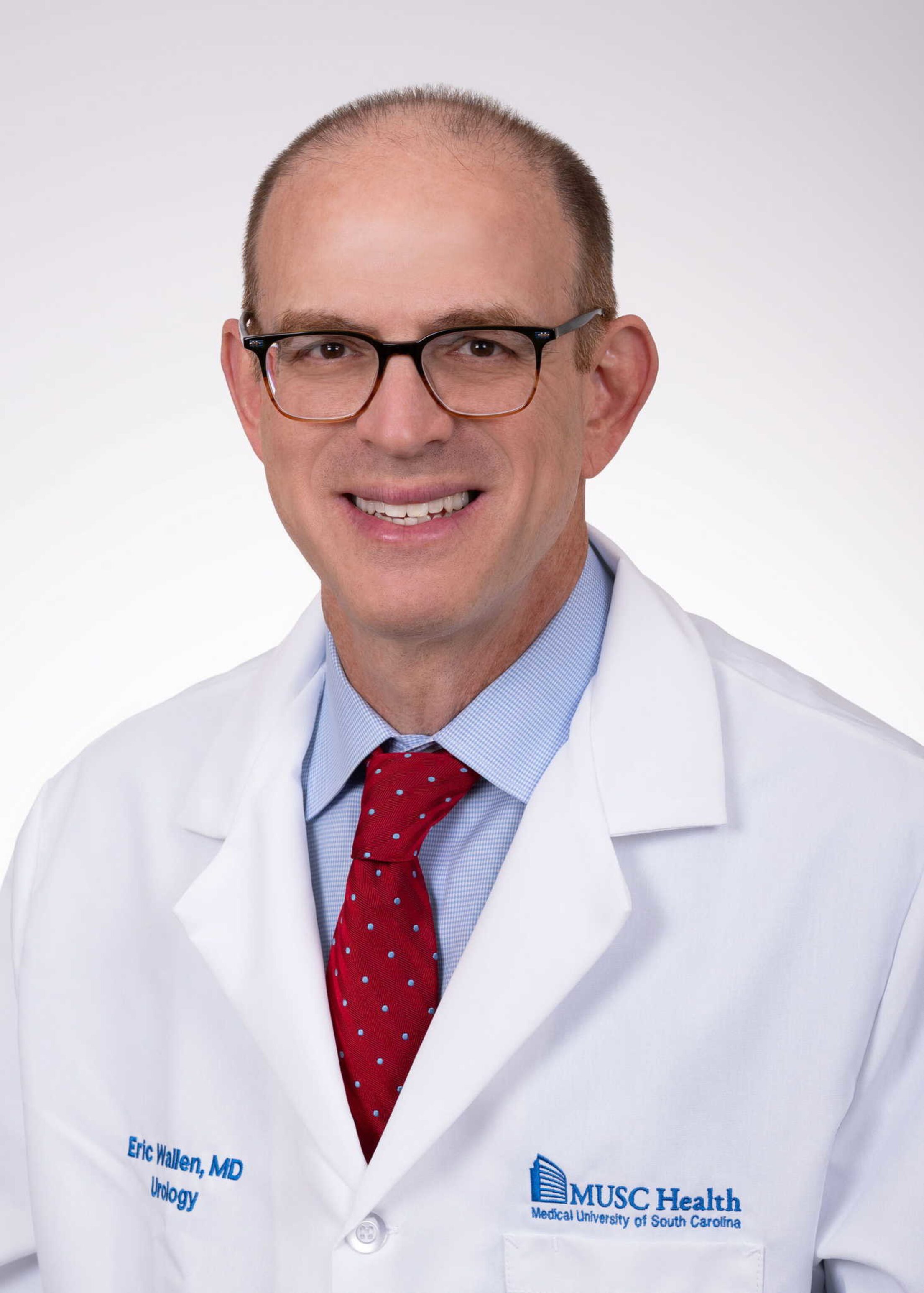
Eric Wallen
Professor and Chair, Department of Urology Assistant Director, Hollings Community Clinical Engagement
Dr. Wallen specializes in care and treatment of patients with cancers of the prostate, kidney, bladder and testis. He was an early adopter and innovator in robotic surgery in urology. He is an expert in robotic kidney and prostate surgery. Dr. Wallen is a strong advocate for patient-centered care, who counsels patients so that they can make informed decisions about their care, such as having surgery for a small kidney tumor or having an MRI, a biomarker test, or a biopsy for elevated PSA (the blood test that screens for prostate cancer). He uses the latest prostate biopsy techniques to decrease pain and the risk of infection.
As a member of the Hollings Cancer Center, he also works closely with community groups, especially those with a higher risk of prostate cancer, to raise awareness and increase access to healthcare in rural and underserved communities.
A native of Setauket, New York, Dr. Wallen graduated from Yale College, then attended UCLA Medical School and completed urology training at Stanford University. His first faculty appointment was at Dartmouth Medical School where he established a minimally invasive urology program. He was on faculty at the University of North Carolina at Chapel Hill for over 20 years prior to his appointment as MUSC Chair of Urology in November 2024.
During his tenure at UNC Chapel Hill Dr. Wallen established the robotic urology program and served as Vice Chair of Education, Urology Program Director, Director of the UNC Men’s Health Program, member of the UNC Lineberger Comprehensive Cancer Center, and Medical Director of the UNC System Supply Chain. An acclaimed educator in the field, Dr. Wallen was awarded the national American Urological Association’s (AUA) “Teacher of the Year” Award, and in 2020 was elected the Chair of the ACGME Residency Review Committee for Urology. In 2021, Dr. Wallen received the UNC School of Medicine Academy of Educators Lifetime Achievement Award in Medical Education, which recognized his 20+ years of sustained excellence in teaching and mentoring medical students, residents, and fellows.
Dr. Wallen’s commitment to global health has taken him to Cuba and China on multiple visiting professorships. He was part of the development of the UNC Project Malawi, establishing an elective rotation for urology residents to experience healthcare delivery in Malawi, starting in 2017.
Dr. Wallen is the author of over 150 publications and book chapters. He has presented his research nationally and internationally. He is certified by the American Board of Urology, is a fellow of the American College of Surgeons, and is a member of the American Urological Association, the Society of Academic Urology, the Society of Urologic Oncology, and the Endourologic Society.