


Tobacco Research at MUSC
Affiliated Faculty & Staff
| Georges El Nahas, Ph.D. Assistant Professor Department of Psychiatry and Behavioral Sciences 68 President Street, BEB 103-P Charleston, SC 29425 843-876-2447 843-876-2344 Fax elnahas@musc.edu |
Michael E. Saladin, Ph.D. Professor Department of Health Sciences and Research College of Health Professions 77 President Street Charleston, SC 29425 843-792-5306 843-792-1358 Fax saladinm@musc.edu |
Graham Warren, M.D., Ph.D. Professor Vice Chairman for Research in Radiation Oncology Department of Radiation Oncology 169 Ashley Avenue Charleston, SC 29425 843-876-2295 843-792-5498 Fax warrengw@musc.edu |
| Dianne Wilson Program Coordinator Department of Psychiatry & Behavioral Sciences 68 President Street Charleston, SC 29425 843-876-2437 843-876-2344 Fax wilsoncd@musc.edu |
Nathaniel L. Baker, MS Assistant Professor Department of Public Health Sciences Phone: 843-792-5028 bakern@musc.edu |
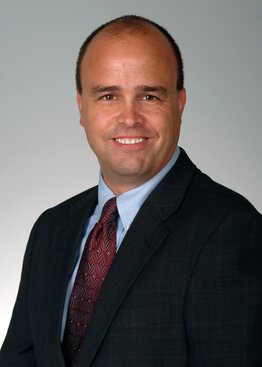
Matthew J. Carpenter, Ph.D.
Associate Director, Hollings Behavioral & Population Science
Professor, College of Medicine - Psychiatry & Behavioral Sciences
Matthew J. Carpenter, Ph.D., is the Flora McLeod Edwards Distinguished Chair in Cancer Research and a clinical psychologist with strong research expertise in behavioral science, particularly addictive behaviors and smoking cessation. In his associate director role, he provides strategic direction, research leadership, and program development to advance behavioral, epidemiologic, and population science across the cancer continuum, with an emphasis on cancer prevention, early detection, health disparities, survivorship, and implementation science.

K. Michael Cummings, Ph.D.
Professor, Department of Psychiatry and Behavioral Sciences
Dr. Cumming's training and research interests are in the study of health related behaviors, especially tobacco use prevention and cessation. His research is primarily population based with a focus on smoking cessation, consumer risk perceptions, the impact of cigarette design on smoking behaviors, and the evaluation of public policies on tobacco use behaviors. Recognized internationally for his work in tobacco epidemiology and smoking cessation, Dr. Cummings has guided global public policy and regulations in the marketing and distribution of nicotine products. This work has involved designing studies to understand factors involved in predicting uptake and cessation of tobacco use and the testing of interventions to alter tobacco use behaviors at both the individual and population level. In 2002, Dr. Cummings established the International Tobacco Research Policy Evaluation Project (ITC Project) to evaluate the behavioral impacts of national level tobacco control policies implemented as part of the WHO Framework Convention on Tobacco Control (FCTC). This international project began in 2002 and involves over 100 scientific colleagues from more than 20 countries and includes a wide range of research projects ranging from those focused on biological factors that influence tobacco use to the impact of health warnings and public education campaigns on representative populations of smokers. As part of his work with the ITC Project he has served as the PI on three large multi-institutional NIH grants (P50 CA111236: 2004-2009, P01 CA138389: 2009-2016, P01 CA200512: 2016-2021). Data from the ITC Project has become an important source of the evidence base used by governments and public health advocates to support tobacco control policy initiatives around the world. Over his 35-year career he has directed more than 70 grants and contracts and has published over 430 scientific papers including landmark reports for the Office of the Surgeon General, the National Cancer Institute, the International Agency for Research on Cancer, and the Institute of Medicine.
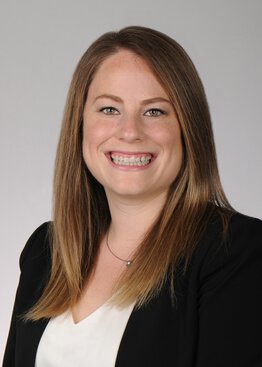
Jennifer Dahne, Ph.D.
Director, Research Innovation and Integration, Office of the Vice President for Research
Director, Innovation Sciences Unit, Department of Psychiatry & Behavioral Sciences
Director, Clinical and Translational Science Research Program, MUSC South Carolina Clinical & Translational Research (SCTR)
Melvyn Berlinsky Distinguished Endowed Chair in Cancer Research
Professor, Psychiatry & Behavioral Sciences
mail
dahne@musc.edu
View Faculty Profile
open_in_new
View Provider Profile
open_in_new
View Research Profile
open_in_new
The Innovation Sciences Unit is led by Dr. Jennifer Dahne, a Professor within the Addiction Sciences Division of the Department of Psychiatry & Behavioral Sciences. Dr. Dahne is an academic entrepreneur who has received five small business grants from various NIH institutes (NIMH, NIDA, NCATS, NIMHD) totaling more than $3M. Dr. Dahne has co-founded two faculty-led spinout companies, both of which are in the digital health space. Dr. Dahne has led the development, evaluation, and commercialization of five commercially available digital health products to date. These products have been evaluated via rigorous randomized clinical trials which have accrued more than 1,000 patients. In addition to entrepreneurial ventures, Dr. Dahne directs a research laboratory within the Addiction Sciences Division that has received numerous traditional NIH grant awards including R01, R21, and K23 funding. Dr. Dahne is passionate about translating academic innovations into products that can be widely disseminated and commercialized in order to improve public health.
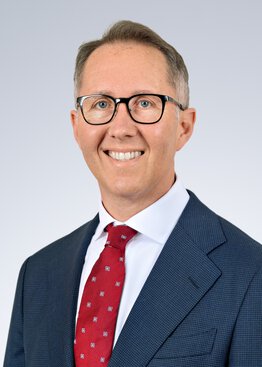
Kevin M. Gray, M.D.
Professor and Chair, Department of Psychiatry & Behavioral Sciences
Co-Director, MUSC Youth Collaborative
mail
graykm@musc.edu
View Faculty Profile
open_in_new
View Provider Profile
open_in_new
View Research Profile
open_in_new
As Chair of the Department of Psychiatry and Behavioral Sciences, Dr. Gray is dedicated to accelerating growth, collaboration, and impact across the tripartite missions of patient care, education, and research. Nationally, he serves in senior leadership roles with the American Academy of Addiction Psychiatry and the American Academy of Child and Adolescent Psychiatry. Within MUSC, his leadership has spanned division, department, college, and university roles. Complementing his work as an active clinician, educator, and mentor, Dr. Gray’s highly collaborative and productive program of clinical research—continuously supported by the National Institutes of Health throughout his career—is focused on understanding and addressing youth substance use and mental health. This work has yielded national and international acclaim, reinforcing MUSC’s strong standing on the world stage.
Dr. Gray grew up in South Carolina and obtained his bachelor of science degree in chemical engineering at Clemson University and his medical degree at MUSC. He completed psychiatry residency and child and adolescent psychiatry fellowship at MUSC. A proud product of South Carolina public schools, Dr. Gray is passionate about “paying forward” opportunities to develop careers, provide outstanding care, and advance health statewide and beyond.
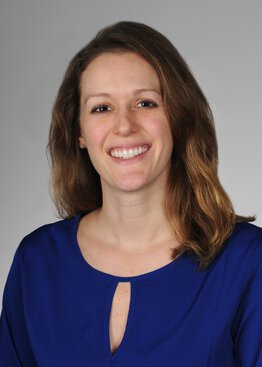
Erin A. McClure, Ph.D.
Associate Professor, MUSC Youth Collaborative Faculty Collaborator
Dr. Erin A. McClure is a behavioral psychologist and an Associate Professor in the Department of Psychiatry and Behavioral Sciences at the Medical University of South Carolina. Dr. McClure earned her B.S. in Psychology and Neuroscience from Allegheny College and her Ph.D. in Psychology from the University of Florida. The overarching goal of Dr. McClure’s program of research is broadly focused on reducing the harmful impact of cannabis and tobacco/nicotine product use across the lifespan. Her research has focused on refining and evaluating strategies to improve long-term abstinence and prevent relapse, as well as pursuing harm reduction strategies to minimize the adverse impact of substance use; all utilizing technology to improve remote procedures and data quality, as well as to increase reach and accessibility.
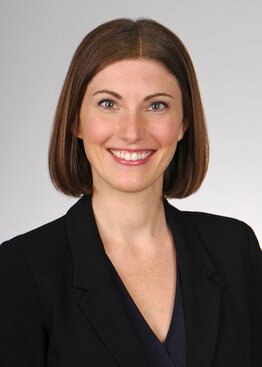
Alana Rojewski, Ph.D.
Assistant Director, Clinical Trials & Healthcare Provider Training, MUSC Hollings Cancer Center
Associate Director, MUSC Health Tobacco Treatment Program
Associate Professor, Public Health Sciences
Research Interests: Dr. Rojewski is a psychologist with a focus on cancer control. Her research interests include tobacco treatment interventions for populations with medical comorbidities and implementing tobacco treatment interventions in the health care system.
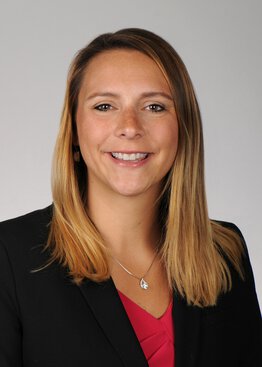
Tracy Smith, Ph.D.
Co-Leader, Cancer Prevention & Control Program, MUSC Hollings Cancer Center
Professor, Psychiatry & Behavioral Sciences
The overarching goal of my research is to test policies and interventions with the goal of reducing the prevalence of smoking and tobacco-related cancer. One arm of my research focuses on tobacco product regulations that reduce the addictiveness and appeal of cigarettes. Over a decade of my work has documented that public health could be improved with a policy that requires a reduction in the nicotine content of cigarettes. Further, one of my ongoing research projects focuses on the impact of a cigarette menthol ban on smoking behavior. Another arm of my research focuses on whether noncombustible tobacco products, like e-cigarettes, can serve as harm reduction tools among adults who smoke cigarettes. I have several ongoing clinical trials testing the harm reduction potential of alternative tobacco products.
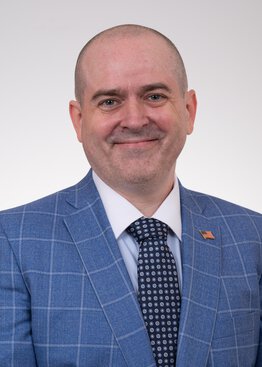
Benjamin Toll, Ph.D.
Associate Director, Hollings Education & Training
Director, MUSC Health Tobacco Treatment Program
Co-Director, Hollings Lung Cancer Screening Program
Oliver and Jennie Donaldson Endowed Chair in Cancer Research
Professor & Vice Chair, Public Health Sciences
mail
toll@musc.edu
View Faculty Profile
open_in_new
View Provider Profile
open_in_new
View Research Profile
open_in_new
Benjamin Toll, Ph.D., a professor of public health sciences and psychiatry at MUSC, specializes in the treatment of tobacco use disorders and improvement of health behaviors. As associate director, his goal is to provide well-structured and effective education and training opportunities for pre- and post-doctoral students and junior faculty at Hollings Cancer Center.
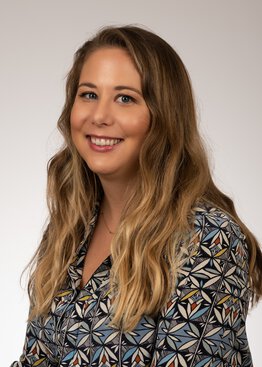
Amanda Palmer, Ph.D.
Research Assistant Professor, Department of Public Health Sciences
Dr. Palmer (she/her) is a Research Assistant Professor in the Department of Public Health Sciences and a Research Member of the Hollings Cancer Control Program. She is also a licensed clinical psychologist with the MUSC Health Tobacco Treatment Program and supervises pre-doctoral clinical psychology interns in the Charleston Consortium. Dr. Palmer's research interests include health psychology and behavioral medicine, with an emphasis on tobacco use and cessation. Her most recent research projects focus on the use of e-cigarettes, oral nicotine pouches, and harm reduction.
Dr. Palmer received her PhD in Clinical Psychology from the University of South Florida, and she completed her internship and postdoctoral fellowship at MUSC.
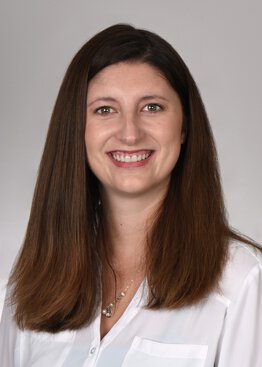
Rachel L. Tomko, Ph.D.
Executive Council, MUSC Youth Collaborative
Associate Professor, Psychiatry & Behavioral Sciences
mail
tomko@musc.edu
View Faculty Profile
open_in_new
View Provider Profile
open_in_new
View Research Profile
open_in_new
View Website
open_in_new
Executive Council
The overarching goal of Dr. Tomko's research is to improve treatment outcomes for individuals with substance use disorders by understanding individual differences in substance use disorder presentation and identifying which treatments are optimal for a specific individual.
South Carolina Tobacco Research Group (SCTRIG)
Description: Tobacco research at MUSC is coordinated through a collaborative group of investigators within SC TRIG. Formed in December 2010, SC TRIG is an interest group composed of experts with research interests in nicotine dependence, smoking cessation, and tobacco control. Our long term working goal is to establish aCenter for Tobacco Research.Mission: The central mission of SC TRIG is to establish and maintain an interdisciplinary, inter-institutional infrastructure for collaboration among researchers and practitioners from across South Carolina who conduct tobacco control research and interventions across the continuum of basic, clinical, and population sciences. The Center would serve as a resource for statewide tobacco control efforts, and would work in concert with existing state- and community-based partners (e.g., DHEC, SCCA, SCTC) toward innovating and disseminating science-based tobacco control policy and programs.
Schedule & Meeting Format: SC TRIG holds monthly research meetings, held the 2nd Wednesday of each month, from 1 p.m. to 2 p.m., in Hollings Cancer Center Room 121 (AT&T conference room).
Meetings have conferencing capability for off-campus attendees and we encourage anyone with an interest in tobacco to attend. Monthly TRIG meetings are informal, but with the general purpose to share research, generate ideas, and build collaborations. Each TRIG meeting is led by one pre-determined presenter who will provide an overview of an ongoing/upcoming research project (Less than 30 minutes). Presentations are best if they are forward-focused; i.e., next steps. Presentations of upcoming grant ideas, even if tentative, are strongly encouraged. The remainder of the meeting (Greater than 30 minutes) are group-based brainstorming sessions.
How to Join: You may join in person or via teleconference line. Please contact Jen Dahne, Ph.D. (dahne@musc.edu / 843-876-2280) or Tracy Smith, Ph.D. (smithtra@musc.edu / 843-792-5164) for more information..
Studies
MUSC participates in a large number of smoking research studies. New trials are added on a routine basis and offer another option to individuals who are trying to quit smoking.How to Join: Call 843-792-8300 to speak to a research professional about study opportunities available at MUSC.
SCresearch.org – The South Carolina Research Studies Directory designed specifically to help people locate research opportunities.
