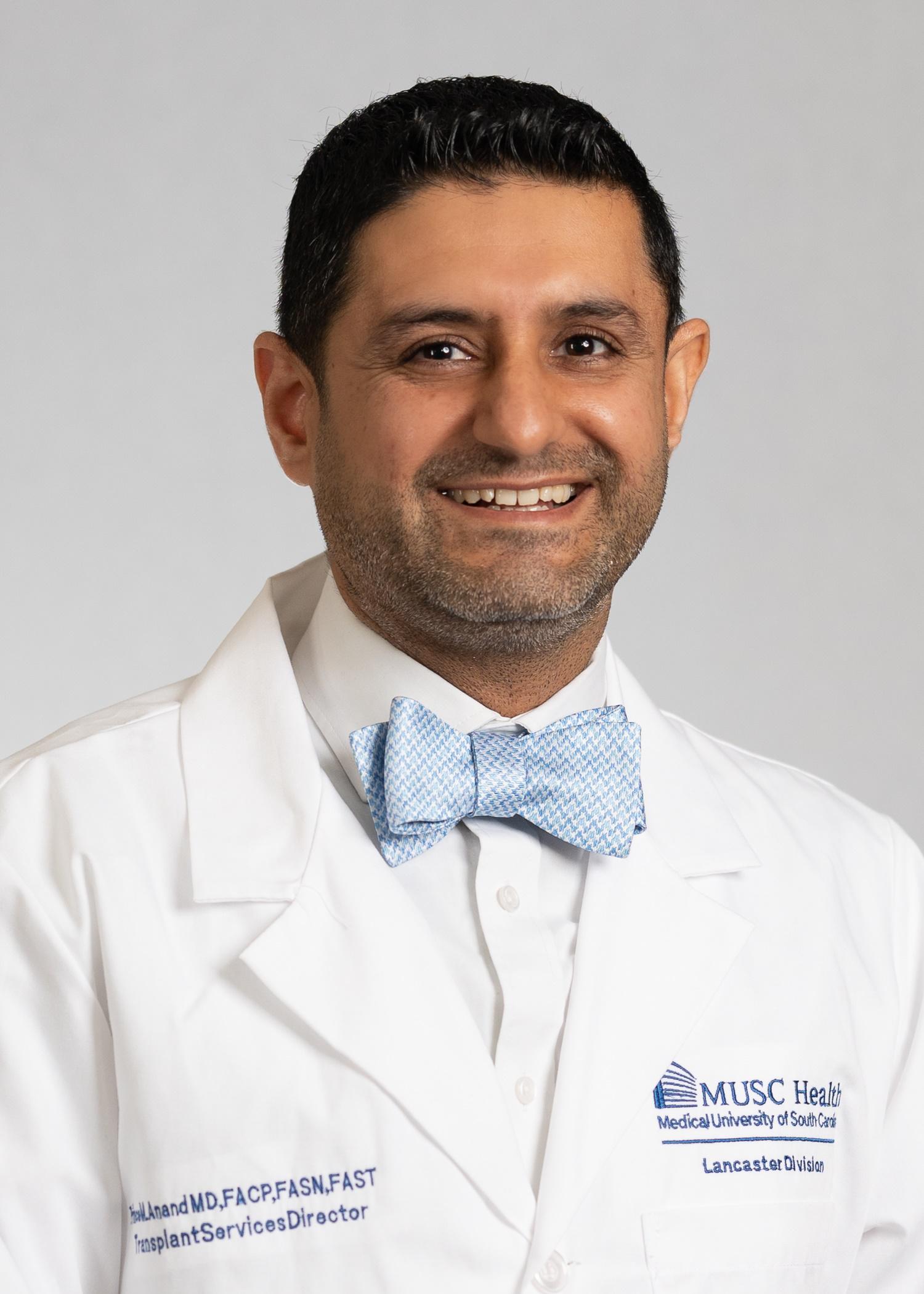


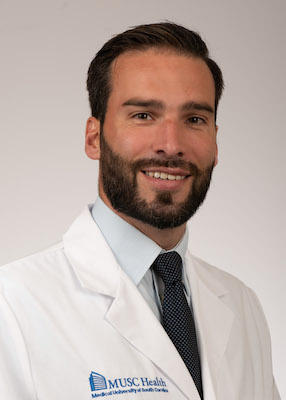
Dirk van der Windt, M.D., Ph.D.
Specialties
- Transplant Surgery
- Liver Transplant
Locations (1)
- Charleston, SC
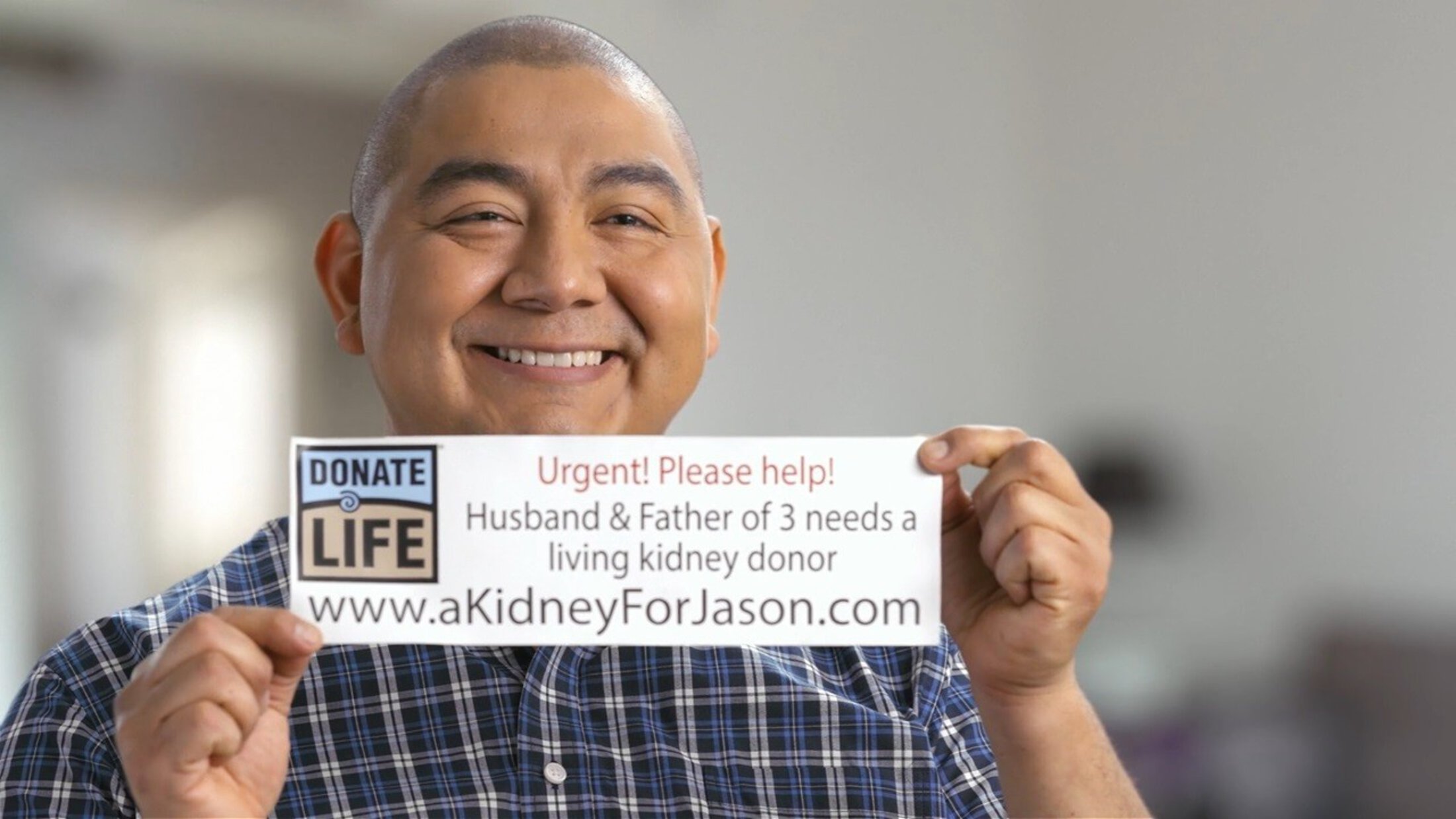
Listen to husband & father of three, Jason Flores, as he shares his story about finding a living donor & receiving a kidney transplant.
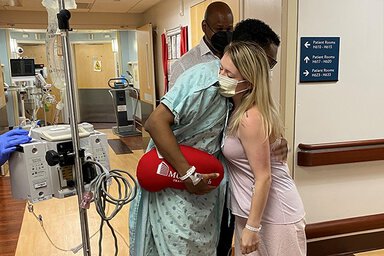
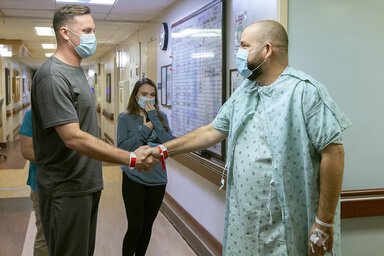
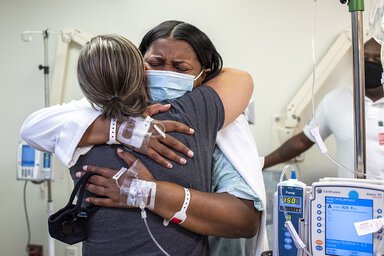
For thousands of people waiting for a transplant in the United States, a living donor could be a lifesaver. A living donor is a live person who chooses to donate an organ or part of an organ to transplant into another person. Recipients experience many benefits when they receive a kidney from a living donor, such as a shorter waiting period, fewer complications, and excellent outcomes.
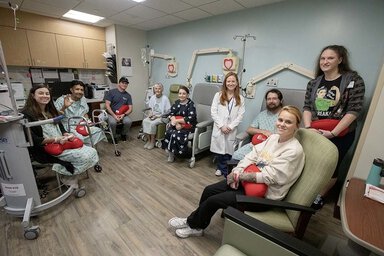
MUSC Health experts perform living-donor transplant surgery for kidney transplants. A dedicated living donor team manages all living donors. They are here to help guide you through the process.
There are more than 90,000 people on the national waiting list for a kidney transplant, and they will be waiting an average of three to five years. The number of kidneys available from deceased donors isn’t enough to meet this demand, and thousands of people die each year waiting for an organ to become available.
There is another way, however. Living kidney donation is a great option for qualified donors and recipients. In fact, donating a kidney to a family member, friend, co-worker or even a stranger is often the best way to provide the lifesaving treatment they need.
MUSC Health’s Living Donor program has been in place for more than 30 years. We’re ready to help you give the ultimate gift – the gift of life.
We are here to support and guide you each step of the way. To speak with a member of the Living Donor Program team call 843-792-5097.
Living donation is the process by which a living donor chooses to have a surgeon remove one of their kidneys and transplant it into a waiting recipient. Living donor kidneys are usually much higher quality than kidneys from deceased donors. They are the gold standard in kidney transplant surgery.
If you are currently waiting for a kidney transplant, a donation could be your key to achieving greater health. Compared to kidneys received from deceased donors:
If you’re interested in donating a kidney, there are several things to keep in mind. First, the entire process is completely elective. In fact, you’ll need to contact one of our Living Donor Program coordinators to get started. There is absolutely no pressure on you to begin or complete the process.
Once you’ve expressed interest in donating an organ, you’ll need to provide a personal and family medical history. If we determine you’re a suitable donor candidate, you’ll undergo several initial screening tests, including blood, urine, and blood pressure analysis.
If these results are satisfactory, your program coordinator will help you schedule the remaining evaluation and testing, which is typically a two-day process.
Once we confirm you’re a suitable donor, we schedule your donation on a date that’s most convenient for you.
Kidney donation surgery is a robotic procedure. This minimally invasive laparoscopic surgical method reduces scarring and pain. Because of MUSC Health’s expertise in living kidney donation, kidney donors are usually able to return home quickly, often within one to two days.
This MUSC Health kidney transplant program has been selected by the Centers for Medicare & Medicaid Services (CMS) to participate in the Increasing Organ Transplant Access (IOTA) Model. The IOTA Model aims to increase access to life-saving transplants for patients living with end-stage renal disease (ESRD) and reduce Medicare expenditures.
This model focuses on providing incentives to selected kidney transplant hospitals to increase transplantation and is designed to support greater care coordination, improved patient-centeredness in the process of being waitlisted for and receiving a kidney transplant, and greater access to kidney transplants.
Through the IOTA Model payments and policies, CMS aims to increase the care delivery capabilities and efficiency of kidney transplant hospitals selected for participation, with the goal of improving quality of care while reducing unnecessary spending. The IOTA Model only affects payments in Original Medicare and does not affect payments or services for Medicare Advantage Plans, Medicare Prescription Drug Plans, or private health insurance plans.
As a patient, the IOTA Model does not change your existing Medicare benefits, choices, or protections. We cannot limit your choice of health care providers or Medicare-covered medically necessary services or treatment options. You still have the right to visit any doctor, hospital, or other provider that accepts Original Medicare at any time, just like you do now.
Medicare shares information about your care with your health care providers such as dates and times you visited a health care provider and your medical conditions. Sharing your data helps make sure all the providers involved in your care have access to your health information when and where they need it.
We value your privacy. IOTA participants must put important safeguards in place to make sure all your health care information is safe. We respect your choice on how your health care information is used for care coordination and quality improvement.
If you don’t want Medicare to share your health care data information, call 1-800-MEDICARE (1-800-633-4227). Tell the representative that your health care provider is part of the IOTA Model, and you don’t want Medicare to share your health care information. Beneficiaries who are deaf, hard of hearing, deaf-blind, or have speech disabilities should call 1-877-486-2048.
As a Medicare patient, you can choose or change your provider at any time. Your nephrologist is the health care provider responsible for coordinating your overall care for your kidney-related disease. Your nephrologist can help you make informed decisions about your health care, track your treatment, and monitor your health outcomes.
If you have questions or concerns about the quality of care or other services you receive from your provider, you can contact 1-800-MEDICARE (1-800-633-4227). TTY users can call 1-877-486-2048. You may also visit the website: https://www.Medicare.gov.
If you suspect Medicare fraud or abuse from your IOTA provider or any Medicare provider, we encourage you to make a report by contacting the HHS Office of Inspector General (1-800-HHS-TIPS).
If you believe your privacy rights have been violated, you may file a privacy complaint with CMS (visit Medicare.gov, or call 1-800-MEDICARE) or with the U.S. Department of Health and Human Services (HHS), Office for Civil Rights (visit hhs.gov/hipaa/filing-a-complaint). Filing a complaint won’t affect your coverage under Medicare.
Living kidney donors are in good general health with no obvious signs of kidney disease.
The National Kidney Donor Registry is a national program to match up incompatible pairs of kidney donors and recipients.
These are well tolerated procedures with minimal overall risk and less than a 1% risk of serious surgical complications.
The length of stay in the hospital is on average 1-2 days and people usually take approximately 6 weeks at home to fully recover.
There are usually up to 6 small scars as this is done with laparoscopic instruments.
Potential living kidney donors are typically between the ages of 18 and 75.
You can truly change someone’s life through living donation. If you’re interested in learning more or beginning the process of organ donation, please contact MUSC Health’s Living Donor Program at 843-792-5097 or register as a liver donor.