

Center for Global Health + College of Medicine
Resourceful Medicine: How a Month in St. Croix Shaped My Clinical Approach
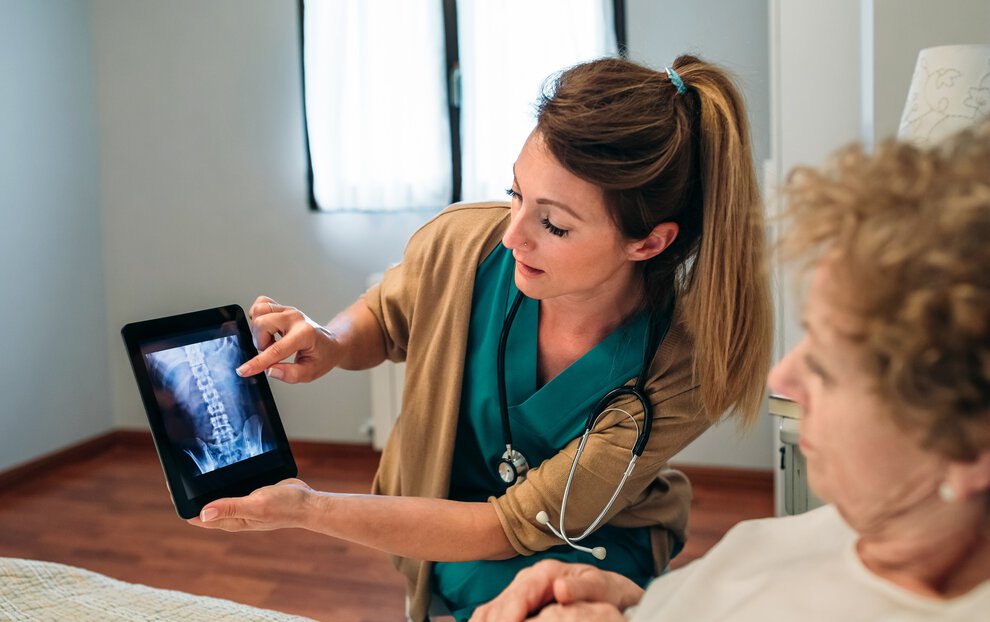
MUSC Health's Chest Wall Injury and Reconstruction Center is a national leader in rib fracture care, offering both nonsurgical management and advanced rib fixation surgery for patients with acute and chronic chest wall injuries in Charleston, South Carolina.
Rib fractures — broken ribs — are cracks in bone tissue that occur after a hard impact to the chest. Causes include motor vehicle accidents, falls, sports injuries, and in some cases, severe coughing. Symptoms include chest pain that worsens with breathing, coughing, or movement. While minor fractures often heal on their own, timely expert evaluation is important: untreated or inadequately managed rib fractures can lead to collapsed lungs and pneumonia.
MUSC Health evaluates and treats the full range of rib and chest wall injuries, from straightforward fractures to complex cases involving multiple broken ribs, non-healing fractures, sternal injuries, and rare conditions like slipped rib syndrome and thoracoabdominal hernia. For patients who need surgery, our specialists use rib fixation technology — tiny titanium plates, splints, and screws — to restore ribs to their natural position, improving recovery time, reducing pain, and lowering the risk of complications.
MUSC Health is one of a select group of programs in the United States contributing to national research that is expanding the use of rib fixation surgery to patients with less severe injuries — increasing access to a treatment that was previously reserved only for the most critically injured patients.
MUSC Health is the only Level I trauma center serving the Lowcountry of South Carolina. Rib fracture patients — many of whom arrive after car accidents, falls, or other traumatic injuries — have direct access to our rib fracture specialists from the moment of admission. Our emergency physicians and rib fracture surgical team coordinate care from initial evaluation through recovery, without the delays that come from transferring between facilities.
MUSC Health participates in groundbreaking national research establishing new clinical guidelines for rib fixation surgery. Our team has contributed to studies demonstrating that rib fixation is safe and effective for patients with less severe fractures — not only the most critically injured — expanding access to a procedure that significantly improves quality of life, reduces pain, and decreases the risk of pneumonia and other complications.
MUSC Health's Chest Wall Injury and Reconstruction Center treats both acute rib fractures and complex chronic chest wall conditions, including non-healing rib fractures, sternal fractures, slipped rib syndrome, and thoracoabdominal hernia. Each patient receives an individualized surgical or medical management plan. For eligible patients, modern surgical techniques allow rib repair through incisions as small as 10 cm — compared to the 30-40 cm incisions that were standard just a few years ago.
Patients recently discharged from another facility with a rib fracture diagnosis can be seen by a MUSC Health rib fracture specialist the next day — via telehealth or in-person appointment. Call 843-792-3780 or use the Schedule an Appointment link above. Both nonsurgical pain management and surgical evaluation are available at the first visit.
Patients from across South Carolina seek second opinions at MUSC Health's Chest Wall Injury and Reconstruction Center, including patients who have been told they have no remaining treatment options. Our team provides a thorough evaluation, reviews all prior imaging, and explains every available treatment pathway — including rib fixation surgery for cases where other providers have not offered it.
MUSC Health's rib fracture specialists share clinical findings through peer-reviewed publications and national speaking engagements. Our team actively contributes to Chest Wall Injury Society efforts to standardize rib fracture care and expand access to rib fixation surgery across the country. We also train the next generation of surgeons through MUSC's medical education programs.
MUSC Health's rib fracture care model brings together emergency physicians, trauma surgeons, rib fracture specialists, respiratory therapists, and physical and occupational therapists. Emergency physicians communicate directly with rib fracture specialists from the moment a patient presents. Therapy teams support breathing recovery, pain reduction, and functional restoration — the full recovery pathway needed to avoid pneumonia and get patients back to their lives.

If you think you have broken ribs — or were discharged from another facility with a rib fracture diagnosis — don't wait. MUSC Health offers next-day evaluation via telehealth or in-person appointment. Both nonsurgical and surgical options are available.
The Chest Wall Injury and Reconstruction Center at MUSC Health treats patients with acute rib injuries as well as chronic rib conditions that require medical and surgical management based on patient-centered treatment plans.
Acute rib fractures or broken ribs after an injury are extremely common. Ribs are often broken in falls, motor vehicle crashes, motorcycle crashes, or anything that hits the chest. These broken bones are extremely painful and can limit your ability to breathe well and move around. Traditional treatment of rib fractures revolved around deadening the pain with strong pain medications. Modern rib fracture management requires multiple specialty trained individuals to optimize patient recovery.
Medical management: The initial treatment goals with rib fractures is to optimize pain control. This is best done through customizing a medication plan based on the patients symptoms and severity of pain. We use several different medications to target our patients pain in different ways. Through this approach, we can minimize the use of opioid medications and enhance patients recovery. Inadequate pain control can result in poor breathing and puts patients at risk of developing pneumonia.
Surgical management: Over the past few years, we have realized that some patients benefit significantly from operating on broken ribs. For patients with 3 or more displaced rib fractures, or multiple fractures along the same ribs, surgical repair of the fractures improves their recovery by decreasing death, pneumonia, pain, and improving quality of life. At MUSC Health, we have the specialists that can perform this surgery utilizing modern-day technology and minimize the size and number of incisions needed for the repairs. Many of the surgeries we perform today can be done though a 10 cm incision instead of one that would have been 30-40 cm just a few years ago.
Recovery: At MUSC Health we have the team to help obtain a full recovery after rib fractures. Often patients have other broken bones or injuries. Our comprehensive team has the experience and expertise to address all these injuries as well. The ultimate recovery however relies on the experience of our therapy groups as well. We have respiratory therapists to improve patients ability to breath and avoid pneumonia. Physical and Occupational therapy work with our patients and improve their ability to move around, decrease pain, improve function of the injured body parts, and learn to take care of their daily needs. Only through this multispecialty approach to these injuries can patients optimally recover.
Non-Healing or Non-Union rib fractures can cause significant pain and disability. Patients with rib fractures that did not heal properly can have deformity, popping or clicking with breathing or movement, or significant pain in a certain part of their chest wall. Treating these fractures requires improving the bone healing to get the breaks to heal normally. This takes a unique approach to treating these injuries. Often, patients need diet or lifestyle modification to improve their bone healing before surgery. At the time of surgery, careful management of the fracture must be done while protecting surrounding structures like blood vessels and nerves must be done. Pain can not always be eliminated by operating on chronically broken ribs but many patients feel significant improvement in their symptoms.
Sternal injuries and fractures can cause significant pain and limited use of the arms. The muscle in the front of the chest (Pectoralis Major) attaches the arm to the chest and plays a major role in moving the arm. If the fracture is displaced, or moves with the pulling of this muscle, it can cause significant pain. In the long term, this can lead to decreased function of the shoulder and possibly pneumonia. Surgery to repair this fracture can greatly improve pain and breathing.
Slipped Rib Syndrome is characterized by severe pain in the back or lower rib cage when patients move or twist into certain positions. Some patients can even feel the ribs rubbing together or popping over each other. The pain comes from the nerve (intercostal nerve) that runs on the lower edge of every rib. Slipped rib syndrome is caused by the 10th rib pushing on the 9th rib nerve and the body interprets this as pain. Additionally, the 9th rib can do the same to the 8th rib. Both the 9th and 10th ribs have smaller cartilage attachments than the rest of the ribs that allows them to “slip” under the rib above them and irritate the nerve. The primary therapy for this condition is surgically stabilizing the ribs and removing their ability to push on the nerve of the rib above.
This is a rare but significant injury that requires care of specialized hospitals like MUSC Health. When the ribs at the edge of the rib cage are fractured, if they do not heal normally patients can develop significant problems. The rib cage can open up and allow organs of the abdomen or chest to come out. This is called a hernia. A hernia including the chest and abdomen is extremely difficult to repair. The best approach is to repair this at the time of the initial rib fracture. If it is not repaired, and a hernia develops, evaluation and surgery at a chest wall reconstruction center will provide the best chance at an optimal recovery and elimination of the hernia.
Most broken ribs will heal in about 3 months. The pain slowly improves over the first two months and really begins to improve between the 2nd and 3rd months. If pain, clicking, popping, or a sensation of the ribs moving persists after 3 months they may not be healing well and should be evaluated by a rib surgeon.
Recovery from injury requires good nutrition and blood flow to the injured areas. Some patients benefit from taking calcium and vitamin D. The use of tobacco products or nicotine impairs blood flow. Additionally, too much movement at the location of the broken rib can also cause it to not heal normally.
Rib fracture pain is typically managed with a multimodal approach — a combination of medications targeting pain from different angles to minimize reliance on opioids. Medications may include anti-inflammatory drugs (NSAIDs), muscle relaxers, mild pain medications, and in some cases, a nerve block administered at the hospital. Your MUSC Health care team will tailor a medication plan based on your symptoms and the severity of your injury.
Multimodal pain medication management and surgery if needed can greatly improve patients recovery. This approach to treatment has been shown to improve quality of life and decrease the chance of getting pneumonia.
Many surgeons perform rib fracture repair. General, Trauma, Thoracic, Orthopedic, and Plastic surgeons around the world perform this surgery. The predominant specialty in the United States is General and Trauma Surgeons. Not every trauma center has surgeons who specialize in rib fracture repair.
Many rib fracture specialists practice at trauma centers. Not all trauma centers have rib surgeons though. The Chest Wall Injury Society can help with identifying rib surgeons in your area and hospital systems that are known for excellence in rib fracture management and surgery. Here at MUSC, we have the multidisciplinary team to care for these complex injuries.
The decision for surgery is determined by a careful conversation between the patient and surgeon. Anyone with significant pain after rib fractures should be considered for surgical intervention.
Clinic appointments can be made on-line or by calling 843-792-3780. Both in-person appointments and virtual appointments are available.
All radiology films will need to be evaluated. The images of the x-rays or CT scans will be needed to fully evaluate the broken ribs and any healing that may have already taken place.
Ideally, the surgery is done within 72 hours of injury. For severely injured patients this may not be possible and then surgery is done as soon as possible.
Yes. In addition to medicine and surgery, some patients can benefit from ultrasound therapy. This can be used to enhance bone healing and ultimately not require surgery.
The location of the broken ribs is identified. An incision is then made to optimally access the location of the fractures and limit the amount of muscle that has to be opened (muscle sparing incisions). The chest is evaluated for other injuries and then the ribs are put back in their normal position. Titanium plates with screws are used to hold the broken ribs in position.
Yes! While this is an uncommon event some people can break their ribs from coughing and sometimes have additional internal injuries. It is important to be evaluated if you think you may have broken ribs coughing.
Find the information and tools you need to access care, manage your health, and get answers to common questions.