

emergency

If you or someone with you is having any life-threatening emergency, call 911 immediately.

Emergency room locations near you

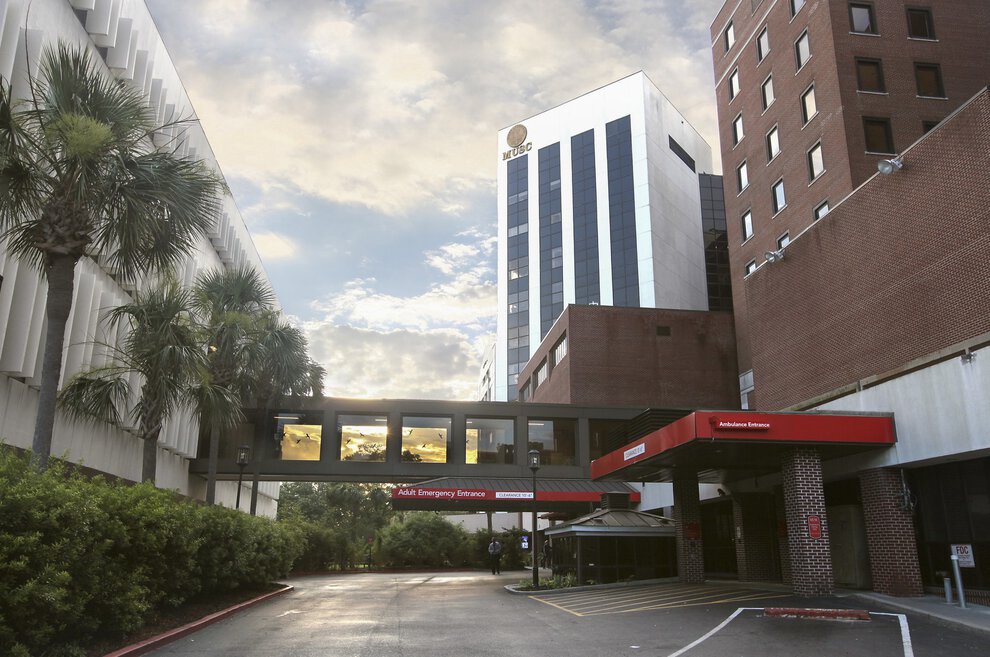
MUSC Health Emergency Psychiatric Assessment, Treatment & Healing (EmPATH) Unit

Address
MUSC Health University Medical Center
171 Ashley Avenue
University Medical Center
Charleston, SC 29425
Hours
Open 24 Hours
Specialties
  • Emergency Medicine
  • Psychiatry

MUSC Health Adult Emergency Department

Address
96 Jonathan Lucas Street
Charleston, SC 29425
Hours
Open 24 Hours
Specialties
  • Emergency Medicine

MUSC Health - Specialty & Women's Emergency Department - Ashley River Tower

Address
MUSC Health Ashley River Tower
25 Courtenay Drive
Charleston, SC 29425
Hours
Open 24 Hours
Specialties
  • Emergency Medicine

What MUSC Health emergency teams treat

MUSC Health emergency physicians treat all levels of medical emergencies — from sudden, life-threatening conditions requiring immediate intervention to complex injuries requiring subspecialty support — 24 hours a day, 7 days a week.

MUSC Health emergency departments are staffed by board-certified emergency physicians with access to subspecialists across nearly every medical field. For complex or multi-system injuries, emergency physicians coordinate directly with MUSC Health specialists in cardiology, neurosurgery, trauma surgery, orthopedics, and other disciplines — all within the same health system.

Conditions our emergency teams treat

  • Heart Attack, Chest Pain & Cardiac Emergencies
  • Stroke, Brain Injury & Neurological Emergencies
  • Trauma & Severe Injuries (fractures, internal bleeding, head injuries)
  • Pediatric Medical Emergencies
  • Behavioral Health & Psychiatric Crises
  • Burns & Complex Wound Care
  • Respiratory Emergencies (difficulty breathing, asthma, lung conditions)
  • Digestive & Abdominal Emergencies
  • Eye Injuries & Vision Emergencies
  • Complications from Cancer Treatment
  • Orthopedic Emergencies (dislocations, complex fractures)
  • Allergic Reactions & Anaphylaxis

This list is not exhaustive. If you are unsure whether your situation requires emergency care, call 911 or go to your nearest emergency room. MUSC Health emergency teams will assess your condition and direct you to the appropriate level of care.

What to expect in the emergency department

When you arrive at a MUSC Health emergency department, our team works as quickly as possible to assess and begin your care. Here is what to expect from arrival through discharge.

When you arrive, a team member will record your information and take your vital signs — including heart rate, blood pressure, oxygen level, and temperature. Patients are not seen in the order they arrive. Our providers prioritize care based on medical urgency — patients at risk of permanent injury, disability, or death are seen first.

As soon as possible, a medical provider — physician, nurse practitioner, or physician assistant — will conduct an initial screening. They will ask about your symptoms, review your medical history, and begin your care plan. A triage nurse will then determine the best location in the department for your ongoing care based on your condition.

Additional testing and treatment will be ordered based on your condition. General timing guidelines: blood work takes approximately 60 minutes once received by the lab; imaging (X-ray, CT scan) may take 1 to 3 hours depending on patient volume; specialty consultations vary from minutes to several hours depending on availability and urgency. Care team members will provide updates and answer questions throughout your visit.

Once your emergency evaluation and treatment are complete, your care team will review your results and determine next steps — which may include discharge with follow-up instructions, hospital admission for further monitoring or treatment, or transfer to a specialty service within MUSC Health. Before you leave, you will receive written discharge instructions, prescription information if applicable, and guidance on follow-up care.

Emergency services frequently asked questions

Go to the emergency room for life-threatening or severe conditions — including chest pain, difficulty breathing, stroke symptoms (face drooping, arm weakness, speech difficulty), serious injuries, uncontrolled bleeding, seizures, or loss of consciousness. MUSC Health Urgent Care and Emergency & Urgent Care (EUC) centers are appropriate for conditions that need prompt attention but are not life-threatening. If you are unsure, call 911 or go to your nearest emergency room — MUSC Health emergency teams will assess your needs and direct you to the appropriate level of care.

A Level I Trauma Center is the highest designation for trauma care in the United States, awarded by the American College of Surgeons. It indicates that a hospital can provide the full spectrum of care for every type of injury — 24 hours a day, 7 days a week — including immediate access to trauma surgeons, neurosurgeons, and subspecialty coverage. MUSC Health is home to the only Adult Level I Trauma Center in Charleston, South Carolina.

Yes. MUSC Health operates multiple 24-hour emergency rooms across South Carolina, staffed by board-certified emergency physicians, nurses, and subspecialty teams. Use the Emergency Room Locations finder above to find the nearest MUSC Health emergency room.

A Comprehensive Stroke Center is the highest stroke care designation awarded by the Joint Commission, indicating that a hospital meets the most rigorous national standards for stroke diagnosis and treatment — including the ability to perform mechanical thrombectomy and neurovascular surgery. MUSC Health was the first program in South Carolina to receive this designation.

Emergency department wait times vary depending on patient volume and the severity of conditions being treated. Patients are prioritized by medical urgency, not order of arrival — those with life-threatening conditions are seen first. MUSC Health emergency teams work to assess and begin care for all patients as quickly as possible. For non-life-threatening conditions, MUSC Health Urgent Care and Emergency & Urgent Care centers may have shorter wait times.

If possible, bring a photo ID, your insurance card, a list of current medications and dosages, and information about any known allergies. If you are experiencing a life-threatening emergency, go immediately — do not delay care to gather documents. MUSC Health emergency teams can look up medication and insurance information if needed.

MUSC Health accepts most major insurance plans in its emergency departments. For questions about coverage, billing, or financial assistance options, visit the Billing & Insurance section below or speak with a MUSC Health financial counselor at your visit.

Amelia
Virtual Assistant
Hello, I am Amelia. How can I help you today? If this is a medical emergency, please call 911 or report to your local emergency room.
toggle chat overlay