
PGY2 Internal Medicine Pharmacy Residency
Purpose
PGY2 pharmacy residency programs build on Doctor of Pharmacy (Pharm.D.) education and PGY1 pharmacy residency programs to contribute to the development of clinical pharmacists in specialized areas of practice. PGY2 residencies provide residents with opportunities to function independently as practitioners by conceptualizing and integrating accumulated experience and knowledge and incorporating both into the provision of patient care or other advanced practice settings. Residents who successfully complete an accredited PGY2 pharmacy residency are prepared for advanced patient care, academic, or other specialized positions, along with board certification, if available.
Program Structure
The Postgraduate Year Two (PGY-2) Internal Medicine Residency Program is a one-year post-graduate training program designed to build upon competencies achieved in a PGY-1 Pharmacy Practice Residency developing specialized areas of practice and providing care for a variety of complex acutely ill patients. PGY-2 Internal Medicine residency provides residents with opportunities to function independently as practitioners by conceptualizing and integrating accumulated experience and knowledge and incorporating both into the provision of patient care or other advanced practice settings. Residents who successfully complete the program are prepared to successfully practice as an internal medicine pharmacy specialist or subspecialist in an area of interest as an integral member of an interprofessional health care team. Residents will also be prepared to pursue a career in a health system or academia and engage in educational or scholarly pursuits.
Program Information
- Orientation (External Residents) (July, 1 month)
- Internal Medicine (4 months):
- Internal Medicine 1 (1 month)
- Internal Medicine 2 (1 month)
- Internal Medicine 3 (1 month)
- Internal Medicine 4 (1 month)
- Infectious Diseases Antimicrobial Stewardship/ID Consults (1 month)
- Ambulatory Pulmonary Clinic/Transitions of Care (1 month)
- Acute Care Family Medicine (1 month)
- Advanced Heart Failure and Cardiothoracic Transplant (1 month)
- Emergency Medicine (1 month)
- Cardiovascular Intensive Care Unit (CVICU) (1 month)
- Inpatient Cardiology (1 month)
- Inpatient Cardiology, Heart Failure (1 month)
- Inpatient Malignant Hematology (1 month)
- Inpatient Transplant Nephrology and Hepatology (1 month)
- Medical Intensive Care Unit (MICU)/Medical-Surgical Intensive Care Unit (MSICU) (1 month)
- Neurocritical Care (1 month)
- Psychiatry Consult-Liaison (1 month)
- Research and Projects (December, 1 month)
- Other elective learning experiences may be developed based on resident interest and preceptor availability
Longitudinal
- Clinical Operations PGY2 IM (1 year)
- Adult Inpatient On Call (1 year)
- Committee and Workgroup Experience (1 year)
- Research Project and Manuscript (1 year)
- Seminar (2 months)
- Up to 26, 8-hour weekend shifts (average of every 4th weekend over 52 weeks)
- Up to 6 weeks of off-site adult clinical on-call (average of every 8 weeks for 1 week at a time)
- Oversee and organize internal medicine team teaching series
- Develop or revise at least 1 clinical pathway/protocol/guideline
- Participate in committee work
- Complete Research Certificate program (if not completed already)
- Present research project (poster and/or podium) at a local, state, regional, or national conference
Tracie Delay, Pharm.D., BCPS
Internal Medicine
Lindsay Deloney, Pharm.D., BCPS
Internal Medicine
Wendy Bullington, Pharm.D., BCPS
Pulmonary Medicine
Program Director
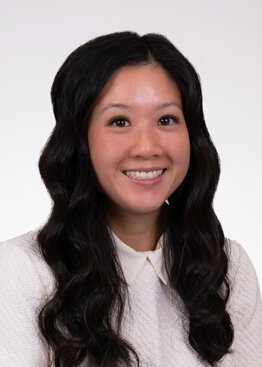
Emmeline Tran, Pharm.D.
Director, PGY2 Internal Medicine Pharmacy Residency Program
Associate Professor, Clinical Pharmacy & Outcomes Sciences
Education: University of Utah
Post-graduate training: PGY1 and PGY2 Internal Medicine at MUSC
Rotations offered: Ambulatory Care Family Medicine
tran@musc.edu
PGY2 Internal Medicine Resident

Kendall Kerr, PharmD
Hometown: Pittsburgh, PA
Pharmacy School: University of South Carolina
PGY1 Program: Vanderbilt
Areas of Interest: Infectious diseases, pulmonary medicine
Research Project: Real-World Use of Dalbavancin as a Transitions of Care Strategy
Hobbies: Running, reading, traveling Charleston Favorites: Folly Beach, James Island County Park, all the oyster bars!
Why MUSC?: “As a large academic medical center, MUSC offers robust rotation experiences, opportunities for interprofessional development, and exposure to complex patients and disease states. Because of these components of the institution, I knew completing a residency at MUSC would challenge me to think critically, practice evidence-based medicine, and train at the top of my license, all of which were top priorities of mine when applying to residency programs.”
