


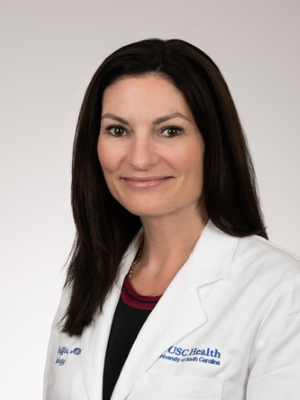
Jan Griffin, M.D.
Specialties
- Heart Failure & Transplant
Locations (1)
- Charleston, SC

Amyloidosis is a condition that occurs when normally healthy proteins in the body become abnormal and misfold, forming amyloid fibrils. There are more than 40 different types of amyloidosis, classified by the specific protein that misfolds. These amyloid fibrils deposit in tissues and organs throughout the body, causing progressive organ damage.
When amyloid deposits build up in the heart, they can disrupt the heart’s electrical system and stiffen the heart muscle, leading to arrhythmias and heart failure.
Identifying amyloidosis can be challenging because the signs and symptoms are often nonspecific. These include bruising easily, shortness of breath, leg swelling, fatigue, and difficulty lying flat. Recognizing and treating amyloidosis requires specific expertise. At MUSC Health’s Amyloidosis Center of Excellence, experts from many specialties meet to discuss your case and develop a personalized treatment plan tailored to your needs.
Cardiac amyloidosis is caused by the deposition of amyloid in the heart muscle. This leads to thickening and stiffening of the heart walls (restrictive cardiomyopathy), impairing the heart’s ability to fill properly and pump blood effectively. Over time, this can result in heart failure and abnormal heart rhythms.
Diagnosis may involve a combination of advanced cardiac imaging, blood and urine testing, genetic testing, and, in some cases, a biopsy to confirm the diagnosis and identify the amyloid type.
With AL amyloidosis, plasma cells in the bone marrow produce abnormal immunoglobulin light chains that misfold and form amyloid deposits. AL amyloidosis can be associated with plasma cell disorders such as multiple myeloma.
These deposits can affect multiple organs, including the heart, kidneys, gastrointestinal tract, and nervous system. AL amyloidosis is also called immunoglobulin light chain amyloidosis.
Transthyretin is a protein made in the liver whose normal function is to transport vitamin A and thyroid hormone.
TTR amyloidosis occurs when the transthyretin protein becomes unstable and misfolds, forming amyloid deposits in organs such as the heart. This can occur due to aging (wild-type TTR amyloidosis) or because of an inherited genetic mutation (hereditary or variant TTR amyloidosis).
MUSC Health offers several clinical trials evaluating new therapies for TTR amyloidosis, including:
MUSC Health is South Carolina’s only Amyloidosis Center of Excellence, offering comprehensive diagnosis, personalized treatment, genetic counseling, and access to clinical trials for amyloidosis. Our multidisciplinary team includes experts in cardiology, hematology/oncology, nephrology, neurology, and genetics.
Amyloidosis affects many aspects of health. Our collaborative care model ensures patients receive coordinated care across specialties. We host an amyloidosis support group to provide education, community, and connection.
Our team is actively involved in multiple ongoing clinical studies advancing therapies for amyloidosis, particularly TTR amyloidosis.
MUSC Health physicians are part of a global effort to understand the relationship between amyloid deposits in the heart and the brain, including links to dementias such as Alzheimer’s disease.
Organ transplant leadership
We offer South Carolina’s only heart transplant program and have performed heart transplants for people with TTR and AL cardiac amyloidosis and advanced heart failure.
Amyloidosis is a multisystem disease requiring a highly coordinated, multidisciplinary care team.
Some standard heart failure medications may be less effective or poorly tolerated in people with cardiac amyloidosis. Our specialists collaborate closely to anticipate these complexities and develop an individualized treatment plan.
For people with AL amyloidosis, chemotherapy can reduce the production of abnormal light chains and help slow or stop amyloid buildup.
Genetic testing is an important part of understanding your type of cardiac amyloidosis and your family’s risks. MUSC Health cardiovascular geneticists provide testing and genetic counseling.
Treatment plans focus on amyloid-targeted therapies, arrhythmia management, and heart failure treatments to minimize further heart damage.
Some people with amyloidosis may be eligible for organ transplantation. Heart transplant may be an option for select patients with advanced cardiac amyloidosis.
Our MUSC Amyloidosis Center has partnered with ARC to simplify patient-provider communication and personalized treatment planning.
Amyloidosis is a multisystem disease requiring a multidisciplinary care team. Our specialists collaborate to ensure patients feel supported, informed, and cared for at every step.
Gazes Research Institute
30 Courtenay Drive
Charleston, SC 29425
843-876-4806
Fax: 843-876-2126
